Serving metro Washington DC
 Call us
The Heavy Truth About Loose Skin After Massive Weight Loss
September 22, 2026
What Actually Happens to Your Skin After Massive Weight Loss
Loose skin after massive weight loss is one of the most common and least-talked-about challenges people face after significant weight loss. Here is a quick overview of what to expect and what actually helps:
Quick answers:
- Loose skin becomes noticeable after losing 50 or more pounds
- Almost everyone who loses 100+ pounds will have some degree of excess skin
- Skin remodels naturally for up to 24 months after weight stabilization
- Resistance training and adequate protein are the most effective non-surgical tools
- Surgery is the only proven solution for severe, persistent skin laxity
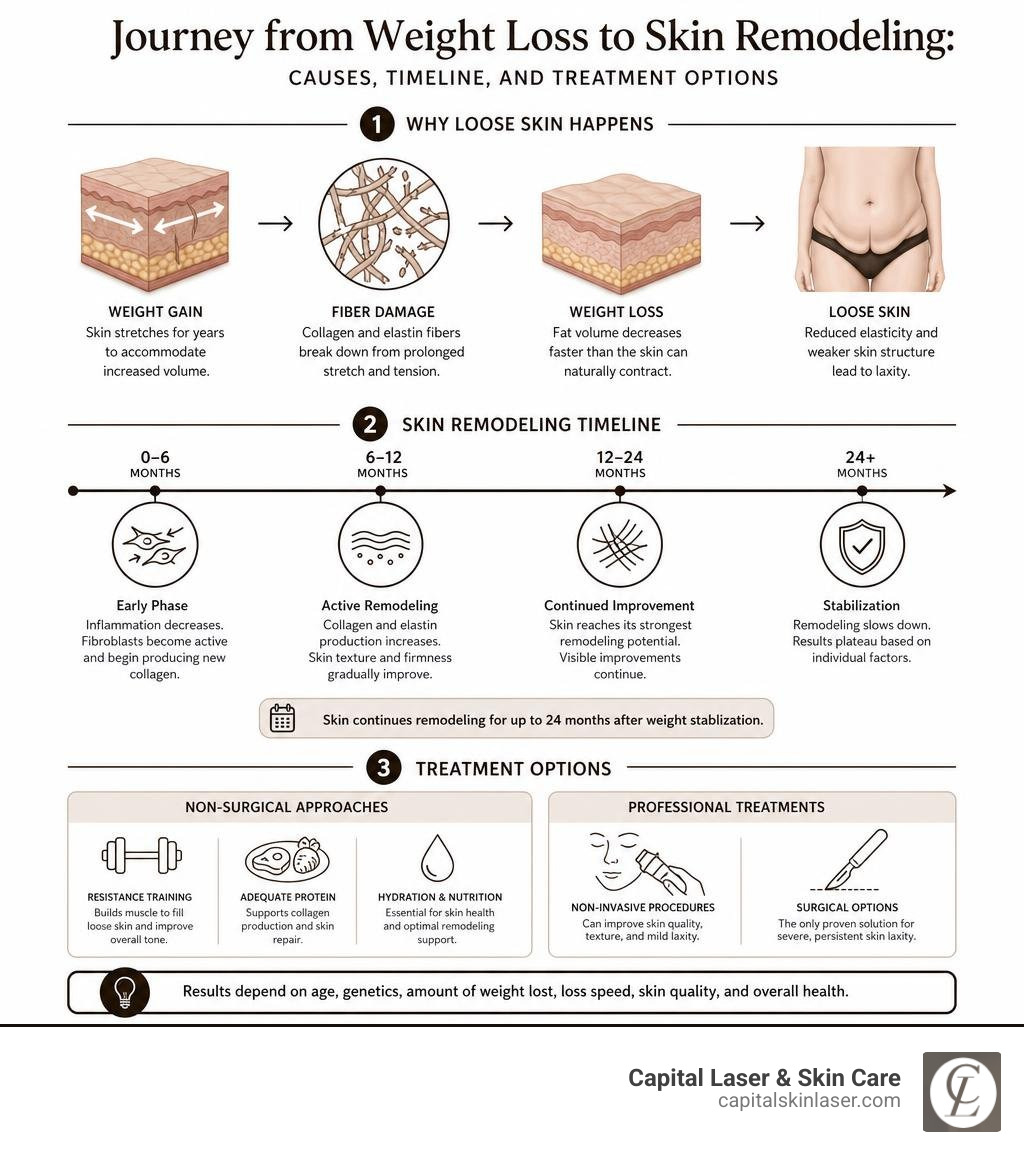
The biology is straightforward. When skin stretches during weight gain, collagen and elastin fibers can become damaged over time. After major weight loss, the skin may not fully contract on its own, especially when it has been stretched for years or weight loss happens quickly.
This is not a willpower problem. It is a structural one.
The good news is that the body does continue remodeling skin tissue for up to two years after reaching a stable weight. How much improvement occurs depends on age, weight-loss speed, total weight lost, and several other factors covered in this guide.
Dr. Elizabeth Tanzi is a board-certified dermatologist and founder of Capital Laser & Skin Care, with extensive experience treating patients navigating loose skin after significant weight loss. The sections below explain the biology, realistic timelines, and the most effective treatments available today.
The Biology of Loose Skin After Massive Weight Loss
To understand why skin sags after significant weight loss, it helps to look beneath the surface. Human skin is a remarkably complex organ made of three primary layers: the epidermis (outer protective barrier), the dermis (structural foundation), and the hypodermis (subcutaneous fat layer). The dermis is where skin elasticity lives, supported by proteins that help skin stay firm and resilient.
When body weight increases substantially over years, the skin expands to accommodate the extra volume. The cells responsible for skin support work hard to keep up with that stretch. Over prolonged periods, however, continuous tension can weaken the skin’s support network and reduce its ability to bounce back.
Once weight is shed, the fat volume supporting the stretched skin disappears. Because damaged elastic support does not fully rebuild in adult tissue, the skin envelope may lose its spring-like tension.
Why Skin May Feel Thinner After Major Weight Loss
After major weight loss, many patients notice that skin feels softer, thinner, or less resilient than it did before. This is especially common when weight was carried for many years or lost quickly.
The reason is simple: the skin has been stretched beyond its natural comfort zone, and the underlying volume that once supported it is no longer there. Some natural tightening can happen over time, but the skin may not fully return to its previous firmness.
This biological change explains why post-weight-loss skin can feel less supportive and more prone to sagging. For a deep dive into these changes, read this evidence-based guide on loose skin mechanisms.
GLP-1 Medications Versus Traditional Weight Loss Dynamics
The rapid adoption of GLP-1 receptor agonists like semaglutide and tirzepatide has transformed modern weight management. However, these medications also change skin contraction dynamics.
GLP-1 medications typically result in faster weight loss compared to traditional dieting alone. While this speed can support metabolic health, it may leave the skin with less time to adapt. Additionally, without structured strength training, some total weight lost on GLP-1 therapy can come from lean muscle tissue. Losing underlying muscle volume alongside subcutaneous fat creates a double loss of structural support, making loose skin look more pronounced earlier in the process.
Key Factors Influencing Natural Skin Retraction
Why does one person lose 80 pounds and experience moderate skin bounce-back, while another person loses the same weight and faces severe skin laxity? The answer lies in several biological and environmental factors.
Predictive Factors for Loose Skin Retraction
The body’s ability to retract loose skin depends heavily on baseline tissue health. Dermal fibroblast activity declines by roughly 2% every year after age 30. Consequently, patients over 40 exhibit up to 60% less natural skin retraction compared to patients under 30.
Key predictive factors include:
- Patient Age: Older skin contains reduced baseline collagen and fragmented elastic fibers.
- Total Weight Lost: Losing under 50 pounds rarely causes severe laxity, whereas losing over 100 pounds almost always leaves redundant skin.
- Duration of Obesity: Spending decades at a higher weight stretches elastin fibers past their point of recovery.
- Smoking History: Nicotine constricts blood vessels and inhibits collagen synthesis, severely limiting natural retraction.
- Genetics and Sun Exposure: Chronic UV damage breaks down dermal support long before weight loss begins.
Clinical calculations show that patients with zero risk factors (under age 40, under 100 lbs lost, gradual loss over 12+ months, non-smoker) have an 85% chance of acceptable skin retraction without surgery. Conversely, patients with three or more risk factors have only a 12% chance of complete natural retraction. To optimize a personal approach, follow this protocol for skin tightness after GLP-1 weight loss.
Rapid Weight Loss vs. Gradual Weight Loss
The rate of weight loss plays a vital role in post-weight-loss skin quality. Rapid loss exceeding 2 pounds per week outpaces the rate of natural collagen turnover.
Patients who lose weight rapidly retain 40% more residual skin laxity at 24 months post-stabilization compared to those losing at a gradual rate of 0.5 to 1 pound per week, even when total weight lost is identical. Slower loss gives dermal fibroblasts critical time to organize new structural matrices around shrinking sub-dermal volumes.
The 24-Month Skin Remodeling Timeline
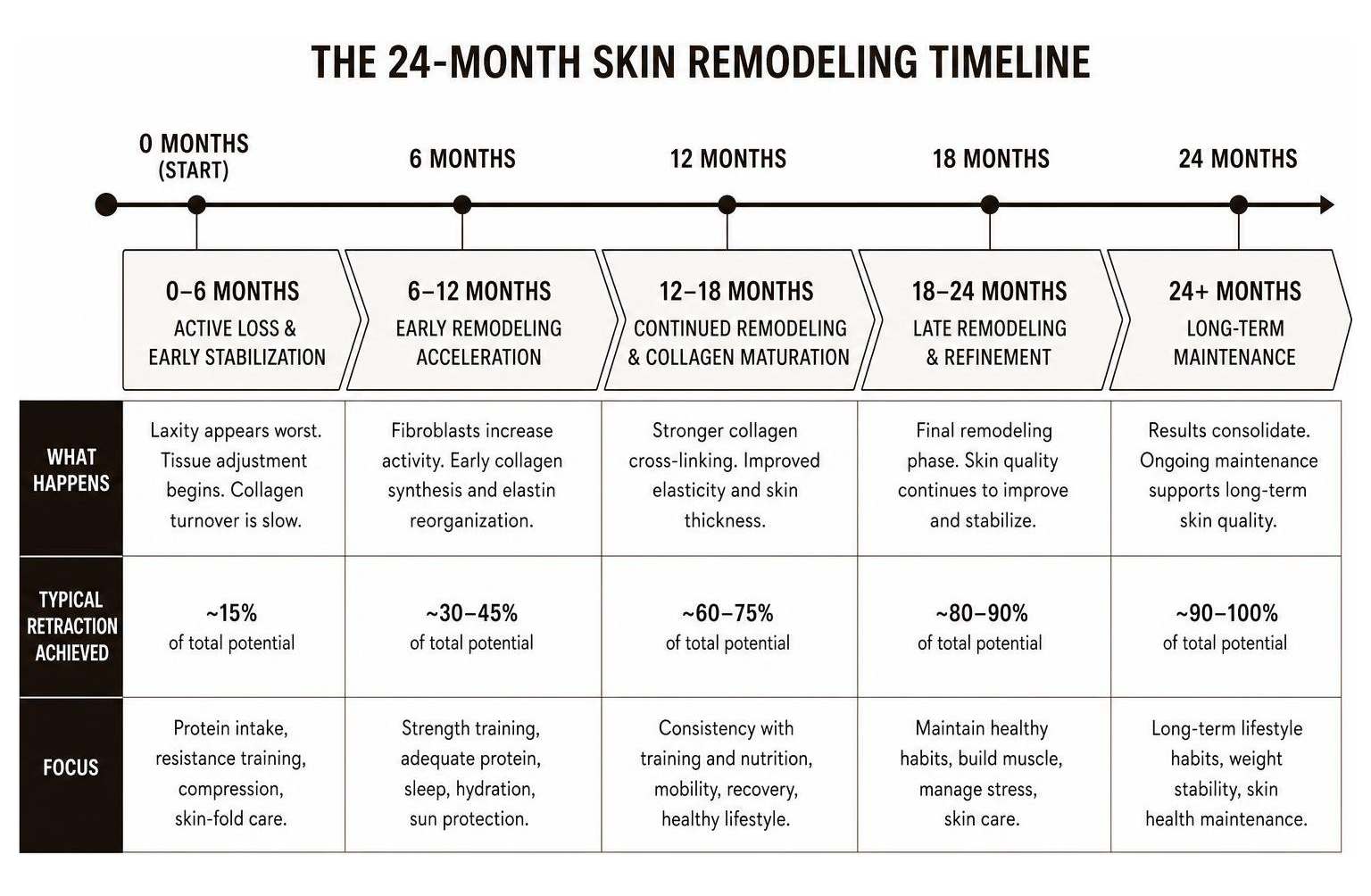
Skin does not stop changing the moment your scale reaches its target number. Natural skin remodeling continues for a prolonged period after weight stabilization.
Months 0 to 6: Active Loss and Early Stabilization
During active weight loss and the first six months of stable weight, skin laxity often appears at its worst. As volume disappears, the skin envelope hangs loosely.
During this initial window, natural retraction achieves only about 15% of its total potential contraction. Tissue adjustment is underway, but collagen turnover is slow (collagen has a half-life of 15 to 20 years, though turnover rates increase slightly under remodeling stress). Patients during this stage should prioritize daily protein intake, start resistance training, and use fitted compression garments to ease mechanical pull and skin-fold friction.
Months 6 to 24: Late Remodeling and Retraction Caps
Between months 6 and 24, true dermal remodeling occurs. By month 12, natural skin retraction reaches approximately 55% of its total potential. By month 24, retraction caps at around 78%.
The remaining 22% of residual skin laxity is typically permanent because destroyed elastic networks cannot rebuild. Once you reach 18 to 24 months of stable weight, what you see is generally the biological limit of natural skin recovery. This is the optimal window to evaluate whether cosmetic or surgical solutions are appropriate.
Non-Surgical Treatment Options for Loose Skin
When facing loose skin after major weight loss, it is easy to get swept up in marketed shortcuts. A treatment-focused plan works best when it separates supportive lifestyle steps from in-office technologies that can stimulate collagen remodeling.
Evidence-Based Non-Surgical Protocols
Non-surgical interventions produce mild to moderate improvements and work best for mild to moderate skin laxity, or as supportive care following moderate weight loss. Severe, hanging skin after very large weight loss usually requires surgical body contouring for meaningful removal.
The most effective non-surgical tools include:
- Progressive Resistance Training: Lifting weights builds underlying muscle bellies to replace lost fat volume. This can improve contour and make mild laxity look less pronounced, especially when paired with adequate protein intake.
- Protein Optimization: Consuming enough protein gives the body amino acids needed for tissue repair, muscle maintenance, and collagen synthesis during weight stabilization.
- Sofwave: Sofwave uses ultrasound energy to stimulate collagen production in the mid-dermis. It can be useful for mild laxity in areas where patients want a non-invasive option with little downtime.
- Thermage: Thermage delivers deep radiofrequency heat to encourage collagen remodeling and gradual tightening. Thermage Skin Tightening Treatment is often considered for patients who want a non-surgical approach to skin firmness.
- SkinTyte: SkinTyte uses light-based energy to gently heat dermal tissue and support collagen contraction. It is often best for subtle laxity and patients who prefer a comfortable series of treatments rather than a more aggressive procedure.
- RF Microneedling: RF microneedling combines controlled micro-injuries with radiofrequency energy to remodel dermal collagen. RF Microneedling Skin Tightening may be especially helpful for localized laxity and texture changes after weight loss.
These technologies do not remove redundant skin, but they can help improve firmness, texture, and contour in carefully selected patients. The right choice depends on skin thickness, degree of laxity, treatment area, downtime tolerance, and whether the main concern is tightening, texture, or both.
Common Myths: Collagen, Hydration, and Creams
Despite popular marketing claims, many widely promoted solutions have no biological capability to eliminate structural loose skin:
- Oral Collagen Supplements: Digested collagen breaks down into standard amino acids in the gastrointestinal tract. It does not preferentially travel to skin fibroblasts over bone or cartilage tissue. While general hydration may improve slightly, oral collagen cannot tighten an expanded dermal envelope.
- Topical Retinoids and Creams: Retinol and firming creams operate entirely within the upper stratum corneum and superficial epidermis. They do not penetrate 1 to 4 millimeters deep into the reticular dermis where structural collagen sits.
- Drinking Excessive Water: Proper hydration keeps superficial skin cells plump, but drinking extra water has zero effect on broken elastic fibers in the deep dermis.
Surgical Interventions: Medical Necessity vs. Cosmetic Choices
For individuals who have lost 80 to 100+ pounds, non-surgical measures often fall short. Body contouring surgery remains the definitive medical treatment for massive skin redundancy.
Medical Indications for Surgical Removal
While many view skin removal as cosmetic, large aprons of redundant skin (panniculus) frequently cause genuine medical complications.
Common medical indications include:
- Chronic Intertrigo: Recurrent bacterial or fungal rashes within deep skin folds that fail to resolve with topical antifungals.
- Skin-Fold Infections: Severe bacterial tissue breakdown or ulcers caused by trapped moisture and friction.
- Mobility Impairment: Large hanging tissue aprons that alter gait, cause lumbar pain, or hinder normal physical activity.
- Hygiene Limitations: Inability to maintain basic personal cleanliness due to redundant skin folds.
Insurance companies occasionally cover a functional procedure called a panniculectomy (removing the hanging lower abdominal apron) if strict criteria are met. To establish medical necessity, patients should keep clear clinical documentation from primary care physicians or dermatologists detailing 3 to 6 months of failed conservative treatments, prescription topical failures, and photographic proof of recurring skin breakdown.
Surgical Options and Timing Protocols
When cosmetic refinement is desired alongside functional relief, procedures like abdominoplasties (tummy tucks), total body lifts, brachioplasties (arm lifts), and thigh lifts offer transformation.
Surgical success requires careful timing protocols:
- Weight Stability: Patients must maintain a stable target weight for at least 6 to 12 months prior to surgery. Operating during active weight fluctuation increases surgical risks and compromises aesthetic results.
- GLP-1 Medication Pauses: Patients using semaglutide or tirzepatide must pause these medications before surgery under medical supervision. Because GLP-1s delay gastric emptying, pausing them reduces aspiration risks during general anesthesia.
- Realistic Expectations: Satisfaction rates after body contouring are high, with 89% of patients reporting great satisfaction at 12 months. However, around 34% of patients require minor revision procedures for wound healing complications, seromas, or residual laxity.
Patients exploring local treatment avenues can review options for What is Body Sculpting After Weight Loss Chevy Chase or learn about What Are the Best Treatments for Loose Skin on the Body Washington DC.
Frequently Asked Questions About Loose Skin
Will loose skin tighten on its own after weight loss?
Mild to moderate loose skin improves over 12 to 24 months of weight stability as the body slowly remodels skin support. Younger patients experience better natural contraction. However, severe loose skin from losing 80 to 100+ pounds rarely resolves without surgical intervention.
Does lifting weights get rid of excess skin?
Lifting weights builds underlying skeletal muscle, which adds volume underneath the skin and improves mild laxity. While it improves overall body shape, muscle growth cannot eliminate large, hanging folds of empty skin.
When is the right time to consider skin removal surgery?
The ideal time for a surgical consultation is after maintaining a stable goal weight for 6 to 12 months, and at least 18 to 24 months after your initial massive weight loss began. This timeline ensures your body has completed its natural skin remodeling process.
Conclusion
Losing a significant amount of weight is a remarkable milestone for health and vitality. Experiencing loose skin after massive weight loss along the way can feel frustrating, but understanding the underlying biology supports informed, realistic care decisions.
From resistance training and protein optimization to treatment options such as Sofwave, Thermage, SkinTyte, RF microneedling, and body contouring consultations, several effective pathways are available. At Capital Laser & Skin Care, board-certified dermatologists specialize in evaluated, compassionate care tailored to each patient’s unique skin health journey.
For post-weight-loss skin changes in Chevy Chase MD, Bethesda MD, or Washington DC, explore the guide on Loose Skin After Weight Loss Chevy Chase or schedule a consultation for body contouring with the expert team today.